BytePlus (ByteDance)
London, UK
BytePlus is the enterprise arm of ByteDance, the company behind TikTok. It sells access to the same artificial intelligence models that power TikTok and Douyin — including models that create video and images from a written description — to businesses around the world. I joined as a Solution Architect Intern, a role that sits between engineering and the commercial teams. My job was to make powerful AI genuinely usable: partly by building internal tools that remove repetitive manual work for my colleagues, and partly by helping customers understand what these models could do for their business. Over the placement I designed, built and shipped six tools that are now used every day by the sales and solution teams. The two I am proudest of open our video-generation model up to people who cannot write code. One lets anyone create a video simply by asking for it in plain English. The other removes a limitation that previously capped every generated video at fifteen seconds. The goal I set myself at the start was that everything I built would be in real use rather than left as a prototype. I met that goal in full.
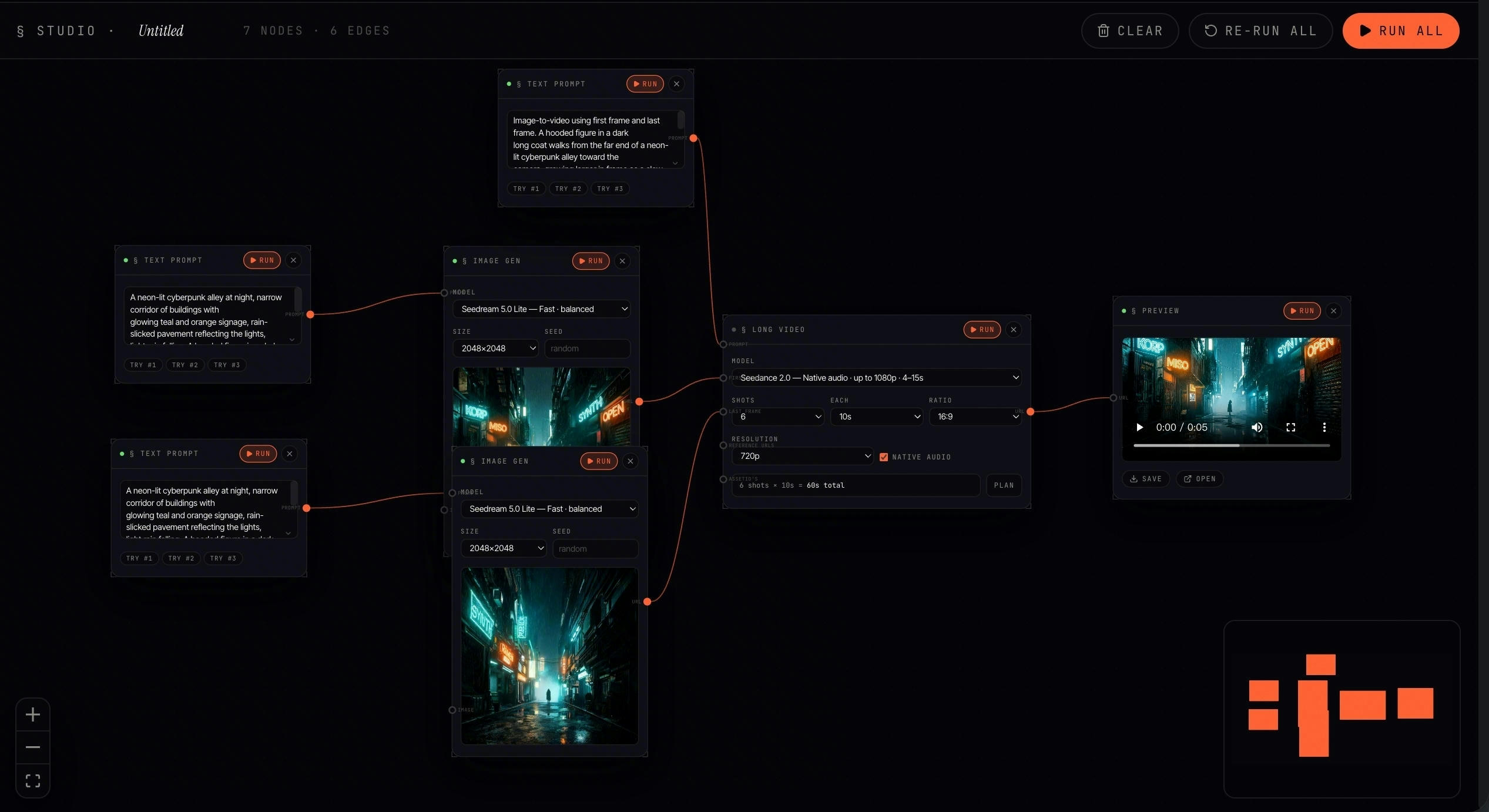
I owned my projects end to end: finding the problem, designing the solution, building it, and getting colleagues to adopt it. I first delivered four tools for the sales and solution teams: - An automated system that finds and ranks potential customers, replacing work previously done by hand. - A daily briefing tool that reads across dozens of message channels and produces one short summary, so nothing urgent is missed. - An assistant that lets new colleagues ask questions about our AI products and get an accurate, sourced answer. - A research assistant that prepares a briefing on a company before a customer meeting. I then went beyond my brief. While producing demonstration videos, I noticed two things that made BytePlus's video-generation model hard for anyone else to use, and I fixed both on my own initiative: - It could only be reached by writing code, which locked out every colleague who does not program. I built an MCP server for it — a standard connector that plugs the model straight into the AI assistants people already use — so anyone can create a video just by describing it in plain language. - It caps each clip at fifteen seconds, so longer videos meant exporting to separate editing software. I built Lumen Hub, a visual workspace that plans a longer story, generates each short piece, and stitches them into one finished video — all in one place, and it picks up where it left off if a piece fails. Neither was in my original plan. Both are now used by the team.
Programming and software engineering. I worked mainly in Python for back-end tools and in TypeScript and React for the visual workspace I built, and I write tests for the code I ship. Working with AI models. I learned how language models and image and video generation models behave in practice: how to instruct them well, how to keep their answers grounded in real sources rather than invented, and how to search a knowledge base by meaning rather than by keyword. Connecting systems together. Most of my work involved communicating with web services reliably — handling jobs that take minutes to finish, retrying safely when a service is busy, and designing a process that resumes where it left off instead of starting over after a failure. Cloud and deployment. I deployed services to cloud servers, packaged them so they run identically anywhere, and handled access keys securely so a tool can be shared across a team without exposing credentials. Video processing. I learned to join generated clips into a single continuous video automatically.
Explaining technical things simply. This was the most valuable skill I gained. The same system has to be described to engineers in terms of how it works, and to sales colleagues in terms of the time it saves them. Doing that well is what decides whether a tool actually gets used. Ownership and working with ambiguity. I was given problems, not instructions. I learned to judge what was worth building, scope it myself, and deliver it — and to know when to ask for input and when to simply get on with it. Working across a bilingual team. My team works day to day in Mandarin and English. Communicating well across both meant I could not fall back on long written explanations, so I leaned on diagrams, prototypes and live demonstrations instead — which made me clearer and more visual than I would otherwise have been. Commercial awareness. I now understand how enterprise technology is actually sold, and why the best technical answer only matters if it addresses the customer's real problem. Professional judgement. I learned to work within review and approval processes and to plan with realistic lead times.